What is behind the quality of our products
Handmade BDSM tools are an investment. It's not just ”a piece of leather with a buckle.”
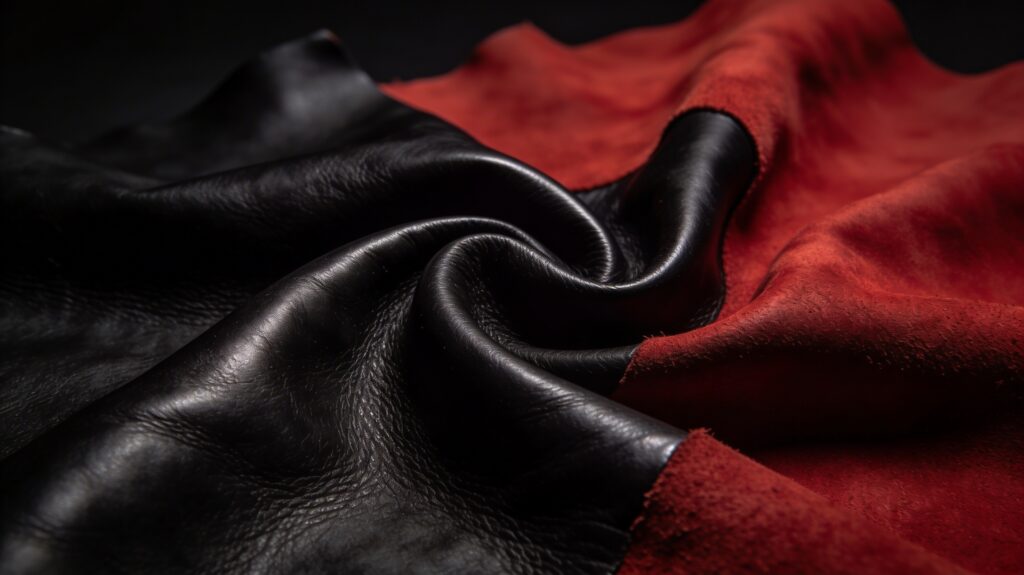
Italian beef leather
We use only fully vegetable tanned 2.5-5 mm thick cowhide from Italian tanneries. Unlike leatherette or cheap Asian leather, it retains its strength and appearance for decades with proper care. Each piece has its own unique pattern - natural material means individuality that synthetics can never achieve.
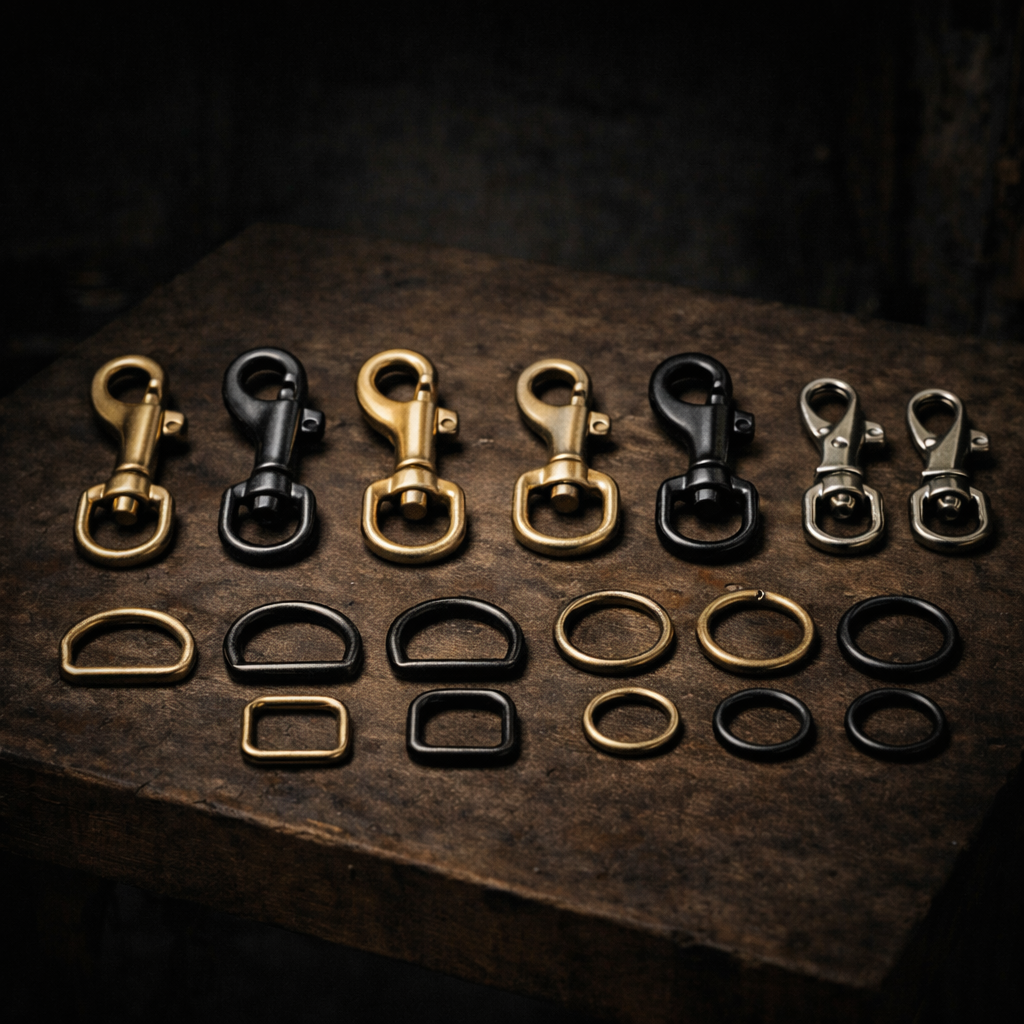
Nickel-free stainless steel fittings
All fittings - D-rings, carabiners, buckles - are made of nickel-free stainless steel. All joints are welded, not just pressed or riveted. This makes a major difference in safety and durability.
Claimed resistance to breakage (real resistance is even higher):
- D-rings: 180 kg
- Round rings: 150 kg
- Carabiners: 125 kg
- Handcuff buckles: 300 kg
- Collar buckles: 110 kg
These values apply to the fitting itself. The limiting factor is usually the seam or the leather itself - that's why I use special friction-resistant thread and double or saddle stitching where stress points are involved.
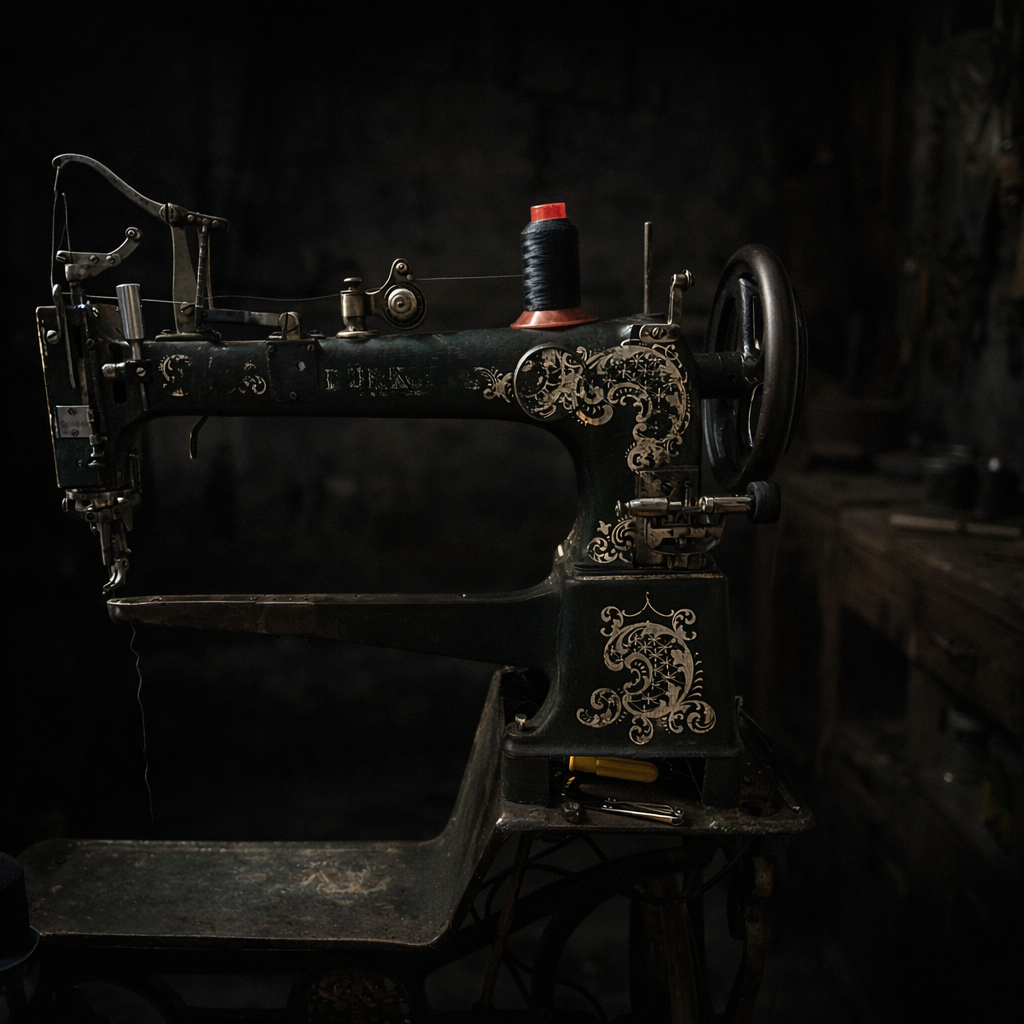
Professional equipment
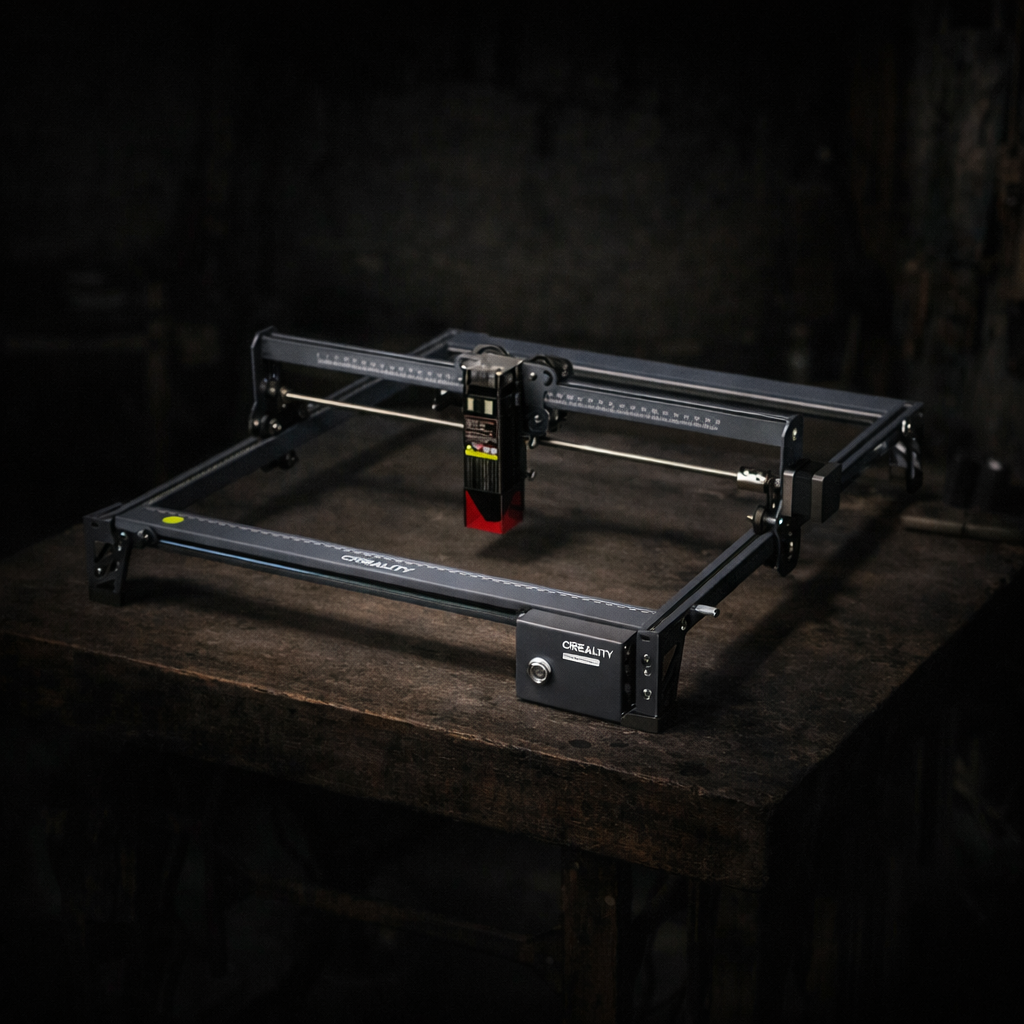
Laser cutter for precision to tenths of a millimetre and detailed engraving. Sewing machine for heavy leather capable of stitching 12 mm of material. A collection of professional hand tools - creasing tools, smoothing tools, stamping tools, hallmarking pliers. Grinders, presses. Quality tools allow you to create tools that match what you expect from them.
How each piece is created
Manufacturing is not just about craftsmanship - it's a combination of design, technology and many hours of handwork.
Design and modelling
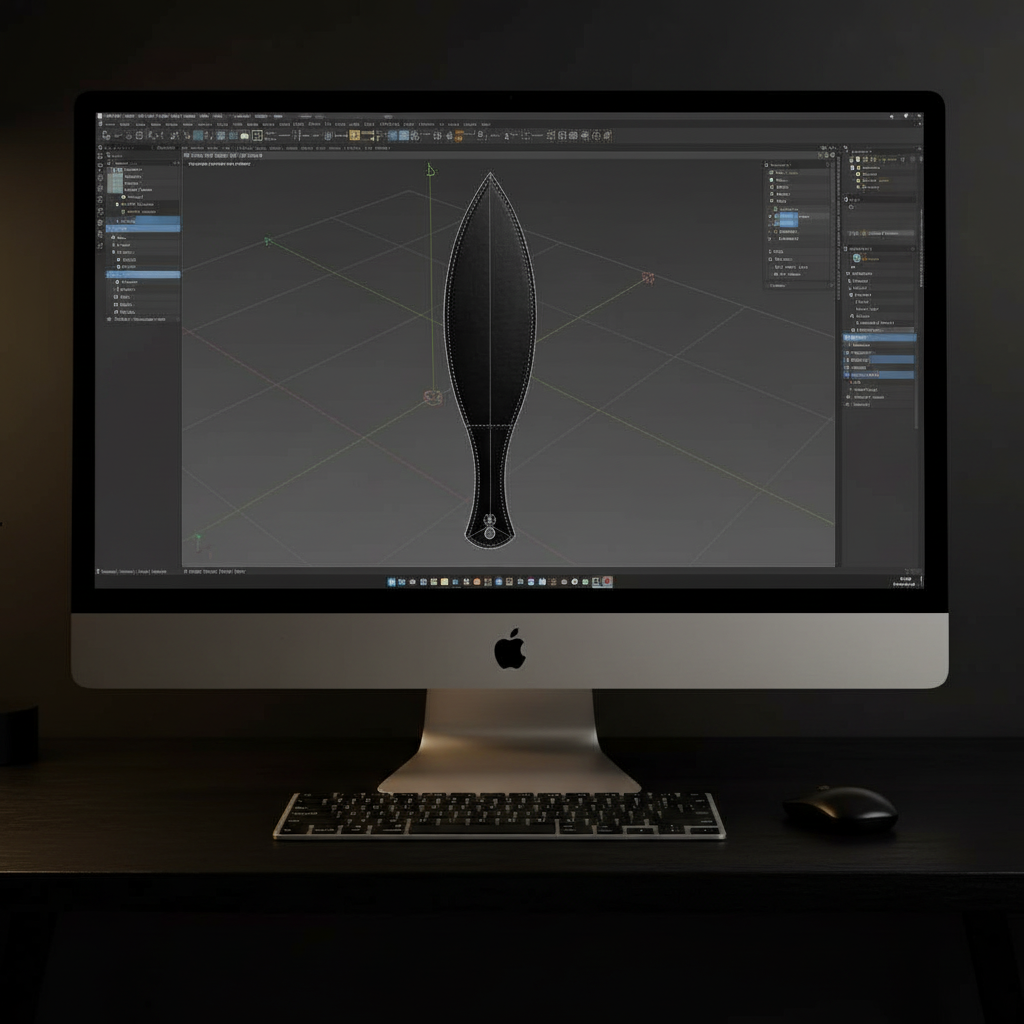
Every product starts from scratch in the 3D software. First we create a 2D sketch, which I then convert to the third dimension. Why 3D? Because the ergonomics of BDSM tools is critical. I need to see how the material bends, where the pressure point will be, how it will fit in the hand, how the slap will hit on the swing. In 3D I can accurately position the sewing holes, calculate the bend angles, optimize the load distribution. By the time I cut into the leather, I know the design works. And anyway, we test new products on ourselves before they go on sale.
Laser cutting and engraving
The finished model goes into the laser cutter. The laser cuts with a precision you can never achieve by hand - not even a millimetre of deviation. It also engraves detailed patterns, logos, personalization. What would take hours by hand and would never be identical, the laser does in minutes and with absolute precision every time. This allows me to create complex designs with dozens of components that fit together perfectly.
Manual processing
The laser produces a semi-finished product - precisely cut parts. Now the real work begins:
1. Edge sanding - I sand the rough edges of the leather first on the machine, then by hand with progressively finer grades of sandpaper
2. Creasing - creating grooves for stitches with a creasing tool to make the seam fit under the surface
3. Staining - coating with a special paint, often in multiple layers
4. Sewing - depending on the construction either by hand with saddlery stitch (the strongest, but 3 times slower) or by machine
5. Gluing - I use professional contact glue where it is necessary to layer the leather
6. Fitting of fittings - D-rings, carabiners, buckles - everything must fit exactly
7. Waxing and polishing of edges - the final finish that gives the edges a shiny, smooth surface
Average time per slap: 4 hours of clean work. A more complex harness can take several tens of hours.
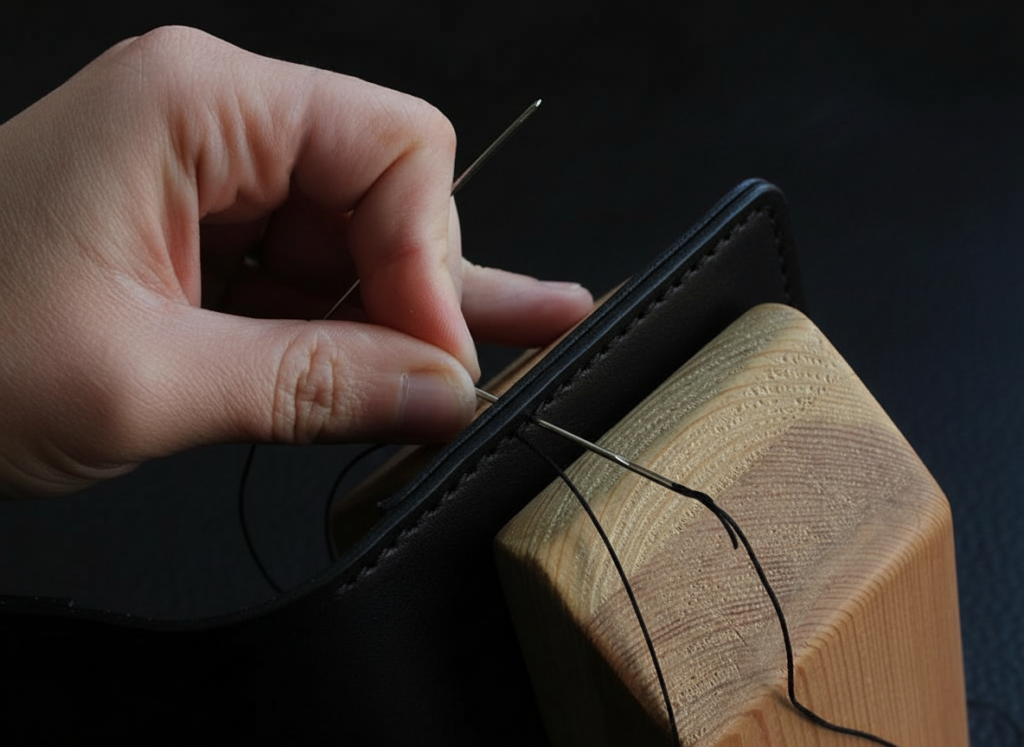
Every step must be precise. A mistake at the beginning means the whole piece will end up in the bin - the leather is unforgiving. That's why two pieces of the same model are always slightly different. Handmade has its own character.
 Czech
Czech  English
  German